Every Monday morning, before the music starts and the group begins to move, we sit in a circle. We share what’s alive, what’s heavy, what’s light, what wants to be felt. This last week, the theme was simple but profound: dancing from feeling, dancing to feeling. Can we even reach our emotions? Does society condition us to push them away? What happens when we finally let ourselves feel, really feel, without apology?
As someone who dances in this group every week and who coaches both leaders and private individuals struggling with their inner emotional world, I see the same pattern everywhere: we are brilliant at thinking, performing and achieving, but often strangers to our own feelings. This article explores what feeling really is, why so many of us struggle to access it, what science says about the cost, and how reclaiming our emotional world can become one of the most powerful acts of leadership and self-liberation.
What is feeling and how does it differ from emotion?
Feeling is the raw, bodily experience of sensation and energy moving through us, a tightness in the chest, warmth in the belly, tingling in the hands. Emotion is the story we tell about that feeling, the label, the meaning, the judgment we add.
Neuroscience shows that feelings originate in the body and brainstem before the neocortex labels them.[1] When we suppress the feeling, we also suppress the valuable information it carries about our needs, boundaries, and values.
Why we lose touch with feeling
Society conditions us early to prioritize thinking over feeling. “Be strong,” “Stay rational,” “Don’t be too emotional”, these messages are especially loud for leaders and high achievers. Over time, we learn to override sensations and emotions to “function” in demanding environments.
Scientific grounding. Chronic suppression of emotion activates the sympathetic nervous system and HPA axis, leading to elevated cortisol and systemic inflammation.[2] Emotional suppression is linked to poorer immune function, higher blood pressure, and increased risk of cardiovascular disease.[3] In leadership contexts, suppressed emotion correlates with burnout, reduced empathy, and lower psychological safety within teams.[4] Long-term emotional numbing is also associated with alexithymia, difficulty identifying and describing feelings, which predicts higher rates of mental health issues.[5]
When we can’t feel, or won’t allow ourselves to, we lose access to vital information: what we need, what we value, what energizes or depletes us. The body keeps the score,[6] but if we refuse to listen, the score becomes louder in the form of exhaustion, disconnection, or quiet despair.
The cost of blocking our feelings
Blocking feelings doesn’t make them disappear, it pushes them underground. They show up as tension, fatigue, irritability, anxiety, or numbness. Over time, this disconnection affects our internal world, creativity dims, intuition weakens, relationships become surface-level, and leadership loses its human depth.
Scientific grounding. Suppressed emotions are strongly linked to higher rates of burnout, depression, and anxiety.[7] Emotional awareness and expression improve resilience, decision-making, and well-being.[8] Long-term suppression also contributes to somatic symptoms and chronic health issues.[6] A large meta-analysis found that people who habitually suppress emotions report significantly lower life satisfaction and higher psychological distress.[9]
How do we reconnect with feeling?
We don’t need to become “spiritual” to feel again. Feelings are biological, it is the body’s natural language. What we need is safety, permission, and practice.
Practical ways to begin:
- Pause and ask, “What am I feeling in my body right now?” (No need to name it perfectly.)
- Move the body, dance, walk, breathe, without trying to control the outcome.
- Create safe spaces (with a friend, coach, or group) where emotions can be expressed without judgment.
In the Monday dance group I participate in, something shifts when people allow themselves to feel. Bodies soften, movements become freer, tears come, laughter erupts. The same happens in coaching sessions when a leader or individual finally names grief, longing, or joy without apology.
Keys for healing: A 5-week journey back to feeling
For those who want structured support to reconnect with their emotions and let go of the past, I created Keys for Healing, a 5-week program for both leaders and private individuals. Drawing on over a decade of experience as a Transformational Coach, combined with trauma-informed practices, somatic work, and positive psychology, this program gently guides participants through emotional release and reconnection.
Module 1: Forgiving yourself
Many of us carry heavy burdens of guilt and shame from past mistakes. Kristin Neff’s research on self-compassion shows that self-forgiveness significantly reduces self-criticism, lowers cortisol levels, and increases self-worth and emotional resilience.[10]
Module 2: Building new habits
Sustainable change starts small. We dive into the science of habit formation (the cue-routine-reward loop) as described by Charles Duhigg and James Clear. Research shows that small, consistent habits rewire neural pathways and build self-efficacy.[11]
Module 3: Leaving the past behind
Old pain and regret often keep us stuck. Studies on expressive writing and symbolic release show that letting go of past emotional burdens reduces rumination and improves psychological well-being.[12]
Module 4: Embracing the future
Fear of the unknown often blocks forward movement. Hope theory by Snyder (2002) shows that combining agency with clear pathways significantly increases motivation and well-being.
Module 5: Feeling more joy and love
As the natural result of the previous work, this final module cultivates daily joy and self-love. Meta-analyses on gratitude interventions show consistent practice increases serotonin, reduces depression symptoms, and boosts overall well-being by 10-25%.[13]
Keys for Healing is a guided journey, not just theory, but a supported transformation in a safe space. Many participants report feeling lighter, clearer, and more alive after completing the program.
Inner wealth: Feeling as the foundation
In my Inner Wealth Program, we build further, we rebuild nervous-system safety, cultivate relational sparks through vulnerability and co-regulation, reclaim creative flow, align external success with inner truth, and anchor in daily gratitude. Feeling is not a luxury. It is the foundation for authentic presence, better decisions, deeper relationships, and sustainable high performance for leaders and individuals alike.
And you?
When was the last time you truly felt something without rushing to explain, fix, or suppress it? What emotion or sensation is asking for your attention right now? What would change in your life if you allowed yourself to feel more fully?
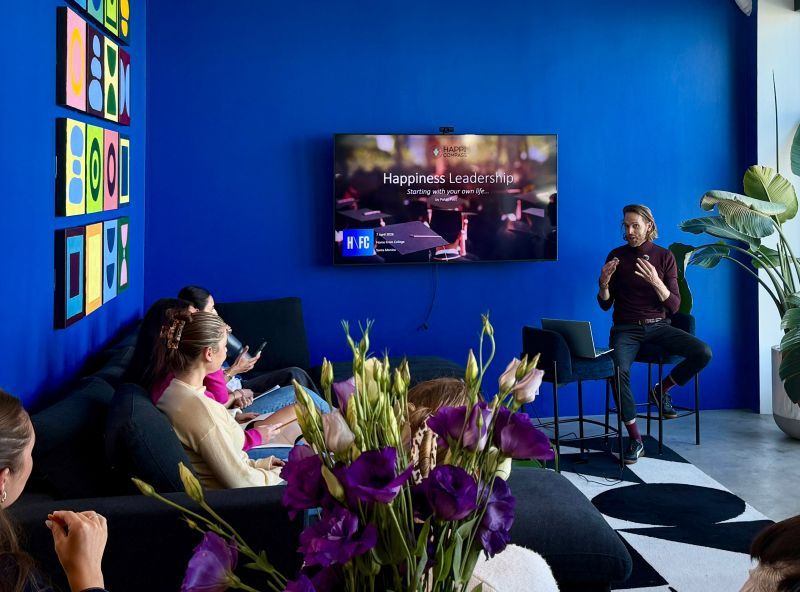
These questions are not to be answered quickly. They are invitations to slow down, to listen inward, to let happiness and aliveness arrive in all their layers one honest moment at a time. Footage made by Michelle Muus Fotografie at Suitehotel Pincoffs, made possible by the PUT-IT-ON platform.
Follow me on Facebook, Instagram, LinkedIn, and visit my website for more info!
Read more from Lidija Poth
Lidija Poth, Transformational Coach
Lidija Poth is a certified transformational coach (OTHM, level 7) accredited by the AC (UK), founder of MyLifeCoachingHub. With two decades shaping urban environments as an architect, city planner, and educator/ mentor at TUDelft, she now channels that strategic insight into empowering individuals, executives, high-intelligence professionals, and those recovering from toxic dynamics. Her co-creative approach builds deep trust to unlock personal freedom, authentic leadership, and joy. Through 1:1 coaching, programs, and immersive retreats in Bali and Croatia, she guides clients to reconnect with their true selves and thrive sustainably. Her mission is to ensure no one is left behind in their journey to becoming their best, most aligned version.
References:
[1] (Damasio, 1994, Descartes’ Error)
[2] (Pennebaker, 1997; Gross, 2002)
[3] (Petrie et al., 1998; Journal of Psychosomatic Research)
[4] (Edmondson, 2018; Google Project Aristotle, 2015)
[5] (Taylor & Bagby, 2004)
[6] (van der Kolk, 2014)
[7] (Gross & John, 2003)
[8] (Mayer & Salovey, 1997; Emotional Intelligence)
[9] (Aldao et al., 2010, Clinical Psychology Review)
[10] (Neff, 2011; Neff & Germer, 2013)
[11] (Lally et al., 2010; Clear, 2018)
[12] (Pennebaker & Smyth, 2016)
[13 (Sin & Lyubomirsky, 2009; Emmons & McCullough, 2003)